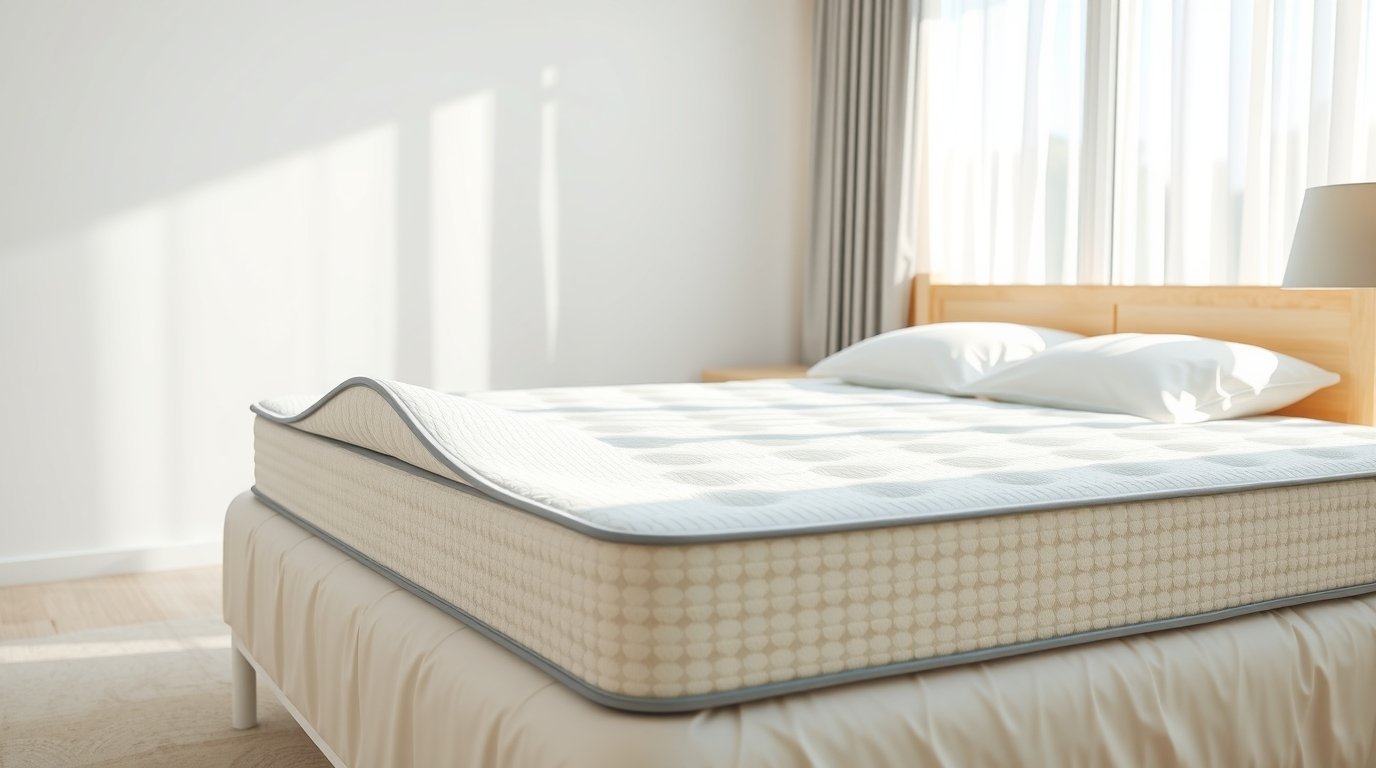
Innerspring Mattresses – Traditional Support & Breathability
Innerspring mattresses rely on a coil-based support system topped with thinner comfort materials for a firm, responsive sleep surface. They remain popular with sleepers who like a classic, buoyant feel and cooler sleep environment.
What Is an Innerspring Mattress?
An innerspring mattress uses a core made mostly of metal coils, usually topped by a relatively thin layer of foam or fiber padding. The coil unit provides the majority of both support and feel, with comfort layers playing a smaller role than in hybrids or foam beds.
Common spring types include Bonnell coils, pocketed coils, and continuous coils. Each approach influences firmness, durability, motion transfer, and contouring.
Advantages of Innerspring Mattresses
Innersprings deliver a firmer, more traditional feel with strong support and enhanced breathability through the coil structure. These traits suit many stomach and back sleepers and those who run hot at night.
Firm Support Feel
Many innerspring mattresses are naturally firmer because of their robust coil systems and thinner comfort layers. This firm support can help keep the spine well aligned for stomach and some back sleepers who risk sinking too much into softer beds.
The buoyant feel also makes it easy to move around, sit on the edge, or get out of bed without feeling trapped in the surface.
Enhanced Airflow
Open coil systems allow significant airflow, helping heat escape more readily than in solid foam cores. This makes innersprings a strong option for hot sleepers or those living in warm climates who prioritize a cooler sleep surface.
When paired with breathable covers and natural fiber padding, innerspring mattresses can feel especially fresh and well ventilated.
Responsive Sleep Surface
The spring unit responds quickly to pressure, creating an instantly supportive, bouncy feel. This responsiveness is ideal for combination sleepers and those who like a lively, on-top-of-the-bed sensation rather than deep contouring.
Couples who prefer more bounce during intimate activities often appreciate the resiliency of an innerspring design.
Disadvantages to Know
Innerspring mattresses usually offer less pressure relief and motion isolation than hybrids or foam models, especially in budget designs. Understanding these drawbacks helps avoid surprises after purchase.
Limited Pressure Relief
Thinner comfort layers and firmer coil systems can create pressure points at the shoulders, hips, and knees, particularly for side sleepers. Without sufficient cushioning, lighter parts of the body receive less support, potentially compromising spinal alignment.
Adding a plush topper can improve comfort, but this adds cost and complexity compared with choosing a mattress that includes robust comfort layers from the start.
Motion Transfer
Traditional tied-coil innerspring systems can transmit motion across the bed when one person moves or gets up. Couples who are light sleepers may find this disruptive compared with more isolating foam or pocketed-coil designs.
Some modern innersprings now use pocketed coils specifically to cut down on motion transfer, but basic models can still be quite bouncy.
Innerspring Mattress Firmness Explained
Most innerspring mattresses fall into the firm to extra-firm range, with some pillow-top versions adding surface softness while keeping strong underlying support. Coil gauge and coil count both influence firmness and feel; lower-gauge coils usually feel firmer and more durable.
Extra-firm innersprings suit sleepers who want minimal sink and maximum stability, while slightly softer versions with plush tops better accommodate side and combination sleepers. Checking both coil specs and comfort layer thickness helps decode how a mattress is likely to feel in practice.
Who Should Choose an Innerspring Mattress?
Innerspring mattresses are generally best for stomach sleepers, many back sleepers, and hot sleepers who want a cooler, more traditional feel. They also appeal to those who dislike the deep hugging sensation of memory foam.
- Stomach sleepers: Firmer, more supportive surfaces help prevent the midsection from sinking and stressing the lower back.
- Back sleepers: Stable, on-top support keeps the spine neutral for many back sleepers.
- Hot sleepers: The open coil core encourages airflow and typically sleeps cooler than dense foam beds.
Innerspring vs Hybrid Mattresses
Innerspring and hybrid mattresses both use coils, but hybrids add thicker foam comfort layers to change the feel and performance. Innersprings rely mostly on coils for both support and feel, with thin padding on top, while hybrids keep coils for support but lean on foam for comfort and pressure relief.
Hybrids usually offer better contouring and joint cushioning, especially for side sleepers. Innersprings may transfer more motion but can run slightly cooler, while hybrids improve motion isolation without giving up too much airflow.
How We Analyze Innerspring Mattresses
Assessing innerspring mattresses involves focusing on coil quality, edge support, and durability signals in long-term reviews. These benchmarks help identify designs that deliver reliable, traditional support over time.
Coil Gauge & Count
Thicker coils and higher counts can improve support, responsiveness, and durability. We pay attention to whether coils are tied or individually wrapped, as this affects contouring and motion transfer.
Lower-gauge coils generally feel firmer and more robust, while higher coil counts can offer finer, more adaptive support.
Edge Reinforcement
Stronger perimeter coils or foam encasements help prevent roll-off and increase usable surface area. This is especially important for couples who share smaller sizes and often use the outer portions of the bed.
Weak edges can lead to a sagging or sliding sensation when sitting or lying near the perimeter.
Review Longevity Signals
Patterns of early sagging, noise, or loss of support indicate potential weaknesses in construction. Conversely, reviews that highlight consistent support, stable firmness, and low noise over several years are positive indicators.
We also monitor how brands handle warranty claims and customer service issues related to coil failures or impressions.
Best Innerspring Mattresses on Amazon
On Amazon, innerspring mattresses include both simple coil-and-fiber designs and more advanced models with pocketed coils and quilted tops. High-value picks usually feature pocketed or high-quality coils, reinforced edges, and consistently strong reviews from back and stomach sleepers.
Evaluating noise levels, long-term support, and reported sagging is crucial when comparing options. Models that maintain firm support and cool sleep over time tend to offer the best value.