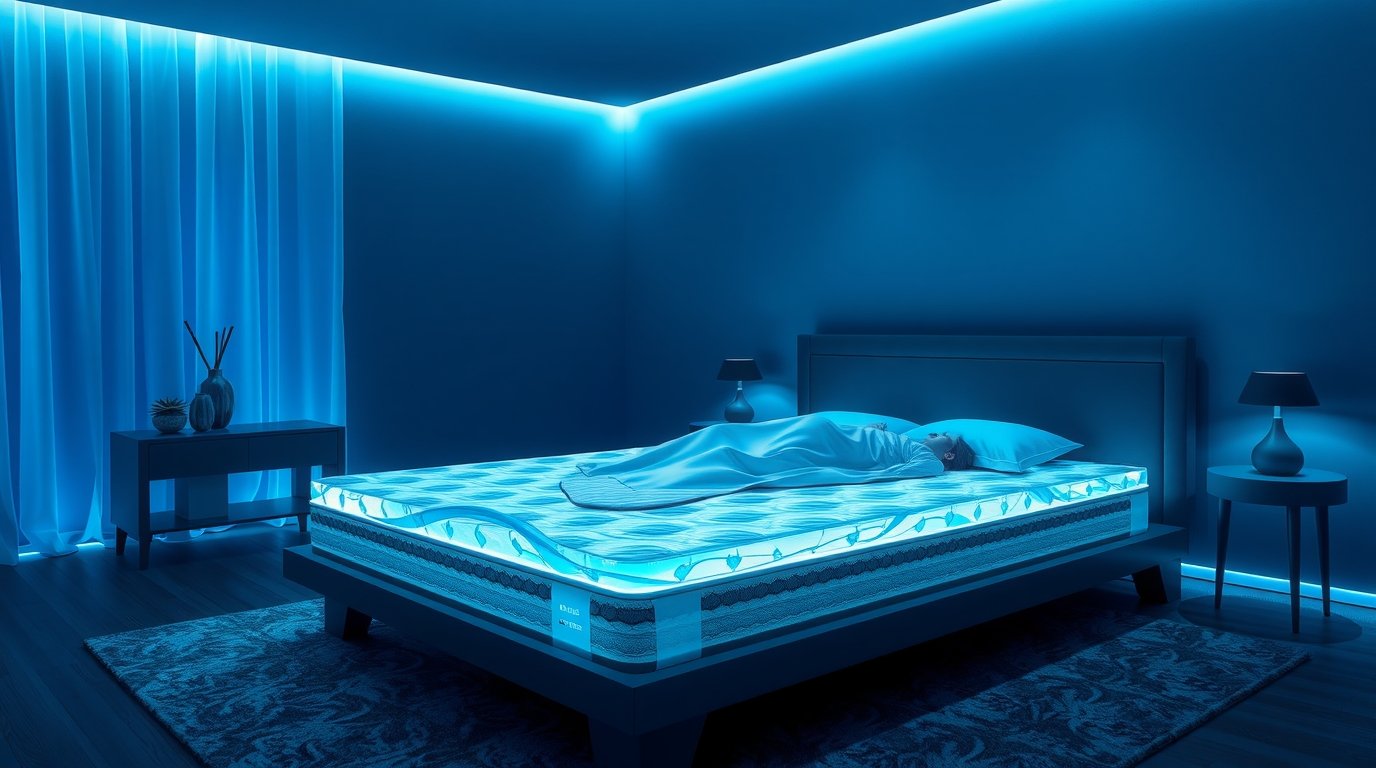
Gel-Infused Cooling Mattresses – Designed for Hot Sleepers
Gel-infused cooling mattresses use gel particles or layers within foam to absorb and dissipate body heat, targeting relief for hot sleepers. Many are memory foam or hybrid designs built specifically around temperature control without sacrificing comfort.
What Is a Gel-Infused Mattress?
A gel-infused mattress incorporates gel into the foam—either as beads, swirls, or full gel layers—to improve heat absorption and distribution. The gel is designed to pull warmth away from the body and spread it through the mattress, reducing hot spots.
These mattresses can be all-foam, with gel memory foam in the top layers, or hybrids that pair gel foams with coil cores for added airflow. Many also use breathable covers or phase-change materials to further enhance cooling.
Cooling Benefits Explained
Gel-infused mattresses tackle overheating through a mix of material science and mattress design. Understanding how they cool the sleep surface helps set realistic expectations.
Heat Absorption vs Heat Transfer
Gel has the capacity to absorb heat from the body and temporarily store or redistribute it, reducing the immediate build-up of warmth at the sleep surface. Phase-change gels can go further by changing state as they absorb heat, which helps maintain a more stable temperature for a period of time.
In combination with open-cell foams or ventilated layers, gel can help move heat away from the body into cooler parts of the mattress, mitigating the typical warmth of standard memory foam.
Breathable Cover Materials
Many cooling mattresses pair gel-infused foam with breathable or moisture-wicking covers. Materials like performance knits, cotton blends, or fabrics with phase-change coatings help release heat and manage humidity at the surface.
This layered approach—gel in the foam plus an airy, cool-to-the-touch cover—often feels noticeably cooler on contact than basic foam designs.
Limitations of Gel Cooling
While gel brings clear benefits, it does not completely eliminate heat for every sleeper. Performance varies by design, climate, and individual heat output.
Cooling Duration Realities
Gel’s active cooling impact is often strongest at the start of the night and may diminish as the foam and gel gradually warm to body temperature. Very hot sleepers or those in extremely warm rooms may still feel some heat build-up over many hours.
For best results, gel-infused mattresses are often paired with other cooling features like coils, breathable bedding, and good room ventilation.
Performance Variability
Not all gel-infused foams perform equally; some use minimal gel that has limited impact beyond marketing. The overall design—including foam density, thickness, and airflow—plays as big a role as gel alone.
Reading detailed specs and user reviews specific to heat and temperature neutrality is critical to judge the real-world cooling performance of a given model.
Firmness & Comfort Expectations
Most gel-infused mattresses target the medium to medium-firm range to appeal to a wide audience. Gel is typically added to memory foam or comfort foams, so the feel remains similar to those materials—contouring with varying degrees of hug—just with upgraded temperature management.
Comfort will depend on foam density, thickness of the gel-infused layers, and whether the bed is an all-foam or hybrid design. Shoppers should still match firmness to body type and sleep position, treating gel as a cooling enhancement rather than the primary comfort determinant.
Who Should Choose a Cooling Mattress?
Gel-infused and other cooling mattresses are ideal for sleepers who routinely overheat on standard foam or spring beds. Several groups benefit especially from this technology.
- Hot sleepers: Those who regularly wake up sweaty or overheated on standard foam.
- Warm climates: Homes in hot or humid regions where bedroom temperatures are harder to control.
- Night sweats: Sleepers dealing with health or hormonal conditions that cause frequent overheating.
Gel-Infused vs Standard Memory Foam
Compared with standard memory foam, gel-infused foam usually feels cooler at first contact and can maintain a more neutral temperature for longer. It provides similar contouring and pressure relief, as it is still memory foam at its core.
Standard memory foam can still be sufficient for naturally cool sleepers or colder climates, but hot sleepers often benefit from the extra temperature management of gel designs. Gel-infused models may cost slightly more due to added materials and cooling technologies.
How We Assess Cooling Mattresses
Evaluating cooling mattresses involves both materials and user experiences related to temperature. We look at material specs and repeated review patterns around heat.
Material Specs
Key components include gel-infused layers, open-cell or ventilated foams, coil units, and cooling fabrics in the cover. The thickness and placement of these materials matter just as much as their presence.
Hybrids that pair gel foams over coils often score highly for hot sleepers because they combine multiple cooling pathways: conduction, airflow, and moisture-wicking.
Review Heat Retention Patterns
User feedback that consistently reports neutral or cool sleep, versus complaints of overheating, is a vital indicator. We also note how different body types and sleeping positions experience temperature on the same mattress.
Cooling mattresses that perform well across seasons and climates, not just in lab tests, stand out as better long-term options.
Best Cooling Mattresses on Amazon
On Amazon, cooling mattresses range from budget gel memory foam options to higher-end hybrids with multiple cooling technologies. When shopping, look for clearly stated gel-infused or phase-change materials, hybrid or ventilated designs for airflow, and verified reviews from self-described hot sleepers.
Reasonable trial and return policies give you a chance to confirm temperature performance in your own bedroom. Mattresses that combine honest cooling claims with strong user feedback typically deliver the best results.