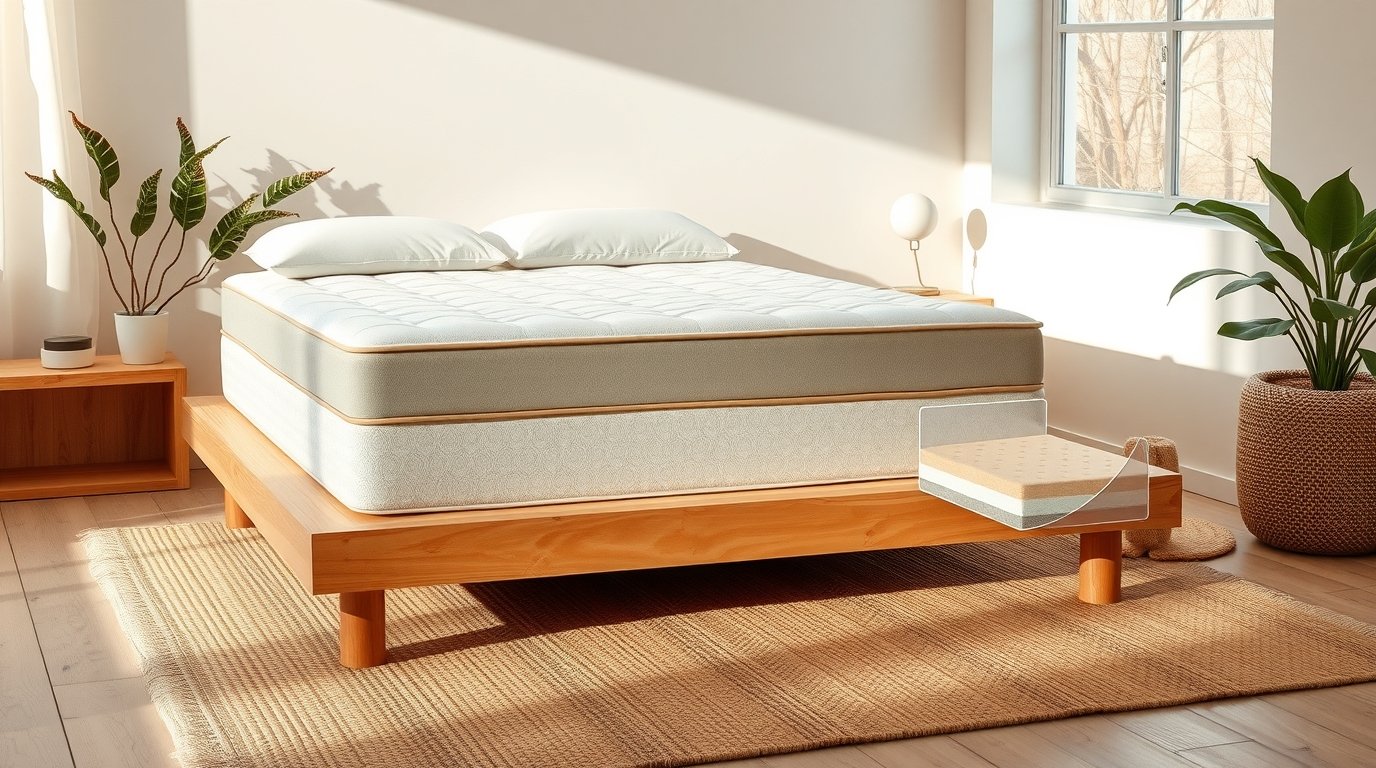
Latex Mattresses – Responsive Comfort & Long-Term Durability
Latex mattresses use foam made from natural or synthetic rubber to offer a buoyant, responsive sleep surface that typically outlasts many other mattress types. They are popular with eco-conscious sleepers and those who want support with more bounce than memory foam.
What Is a Latex Mattress?
A latex mattress is built from one or more layers of latex foam, sometimes paired with a coil core in hybrid designs. Latex can be derived from natural rubber tree sap, synthetic materials, or a blend of both.
The two primary latex processing methods are Dunlop and Talalay. Dunlop latex is denser and more supportive with a slightly firmer feel, while Talalay latex is lighter and more airy, often perceived as softer and more contouring at the same firmness rating.
Natural latex tends to appeal to buyers seeking more sustainable, low-VOC materials, while synthetic and blended latex can lower costs. Certifications and material transparency matter when comparing options.
Benefits of Latex Mattresses
Latex offers a unique mix of responsiveness, breathability, and longevity that sets it apart from memory foam and basic foam beds. These properties make latex a compelling choice for a wide range of sleepers.
Natural Responsiveness
Latex compresses quickly under pressure and springs back just as quickly, creating a buoyant, lifted feel. This makes it easier for combination sleepers to change positions without feeling stuck, a common concern with slow-response foams.
The material still contours around the body but does so with a more subtle hug than memory foam, maintaining a sensation of sleeping more “on” than deeply “in” the mattress.
Breathability & Cooling
Latex foam is typically more open-celled and often ventilated with pinholes, which can enhance airflow compared with dense memory foam. Natural latex combined with breathable covers and, in some models, coil support cores often results in a cooler sleep environment.
For hot sleepers who dislike the heat build-up of conventional foam but still want cushioning, latex is a strong contender. It balances comfort and temperature control well in many climates.
Durability & Longevity
High-quality latex is known for excellent durability, often maintaining support and resilience longer than many polyfoam and basic memory foam beds. Over time, latex is less prone to deep body impressions and sagging when used in adequate thickness and density.
Although latex mattresses usually cost more upfront, this longevity can translate into better long-term value. Many owners keep a well-made latex mattress significantly longer than cheaper alternatives.
Potential Downsides
Latex mattresses, while high-performing, are not ideal for every shopper. Price and feel are the most common considerations.
Price Considerations
Natural latex and multi-layer latex builds tend to be among the more expensive mattress types. The higher cost reflects both the raw materials and the manufacturing process, especially for certified organic and eco-focused models.
Budget shoppers may find all-foam or hybrid beds more accessible, though some brands now offer more affordable latex or latex-blend options that still capture much of latex’s feel.
Firmer Feel Preference
Latex naturally feels a bit firmer and more buoyant than equivalently rated memory foam. Sleepers who crave a deep, slow-moving hug or ultra-plush surface may find latex too springy or supportive, even in softer versions.
However, for those who dislike a collapsing or enveloping sensation, this same quality can be a key advantage and make latex feel more stable and predictable.
Latex Mattress Firmness Profiles
Latex mattresses typically range from medium to firm, with fewer ultra-soft models. Dunlop latex usually feels slightly firmer and more supportive, while Talalay formulas can achieve softer, more cushiony feels without losing resilience.
Many brands build latex mattresses with multiple layers of varying firmness, allowing for zoned support or even flippable configurations to fine-tune feel. Understanding whether you’re getting primarily Dunlop, Talalay, or a blend helps anticipate overall firmness and response.
Who Should Choose a Latex Mattress?
Latex mattresses are particularly well-suited to sleepers who want a mix of bounce, support, and durability, often with an eco-conscious angle. Several profiles align especially well with this category.
- Eco-conscious sleepers: Those who prioritize natural, low-VOC materials often gravitate to certified organic latex.
- Combination sleepers: The responsive surface makes changing positions easy without the stuck feeling of slow foams.
- Those preferring bounce: Sleepers who like some spring and lift but still want contouring find latex a comfortable middle ground.
Latex can also work well for many back and stomach sleepers who need firm, consistent support without excessive sink.
Latex vs Memory Foam
Latex and memory foam differ significantly in feel, responsiveness, and temperature regulation. These contrasts make each more suitable for certain sleeper preferences.
Latex is bouncy and quickly responsive, while memory foam is slow-moving and deeply contouring. Memory foam typically isolates motion better, whereas latex, though decent, can transfer slightly more movement.
Latex usually sleeps cooler due to its structure and ventilation, whereas memory foam can retain more heat unless modified with cooling technologies. Sleepers wanting a weightless, lifting sensation with good support lean toward latex, while those craving maximum pressure relief and a deep hug often prefer memory foam.
How We Evaluate Latex Mattresses
Assessing latex mattresses involves focusing on latex type, layer thickness, and support core design, along with real-world durability feedback. These factors reveal which models justify their higher price.
Latex Type & Thickness
Knowing whether the mattress uses natural vs synthetic latex, Dunlop vs Talalay, and how thick each layer is helps predict feel, support, and lifespan. Thicker comfort layers offer more pressure relief, while firmer support layers keep the spine aligned.
Multiple latex layers can also be arranged for zoning, with slightly softer latex under shoulders and firmer latex under hips and lumbar for better alignment.
Support Core Design
Latex may be used as both comfort and support layers in an all-latex build, or paired with coils for added lift and airflow in a hybrid. All-latex cores emphasize uniform support and durability, while latex hybrids add extra bounce and edge reinforcement.
We look at overall height, layer stacking, and material density to assess how a mattress is likely to perform for different body types.
Customer Durability Feedback
Long-term reviews about impressions, sagging, and comfort changes over years are critical, since latex often aims for extended use. Consistent reports of stable support and minimal body impressions support the durability reputation of the mattress.
We also consider brand support around warranties and how they handle claims related to early wear or defects.
Best Latex Mattresses on Amazon
Latex selection on Amazon includes both all-latex and latex-hybrid options, often positioned as eco-friendlier, cooler alternatives to basic foam beds. When choosing latex on Amazon, prioritize clear labeling of latex type, adequate thickness of latex comfort layers, and strong user feedback on support, temperature, and durability.
Certifications and transparent material descriptions are especially important for latex shoppers. Models that balance genuine latex content, thoughtful construction, and consistent positive reviews typically offer the best value.