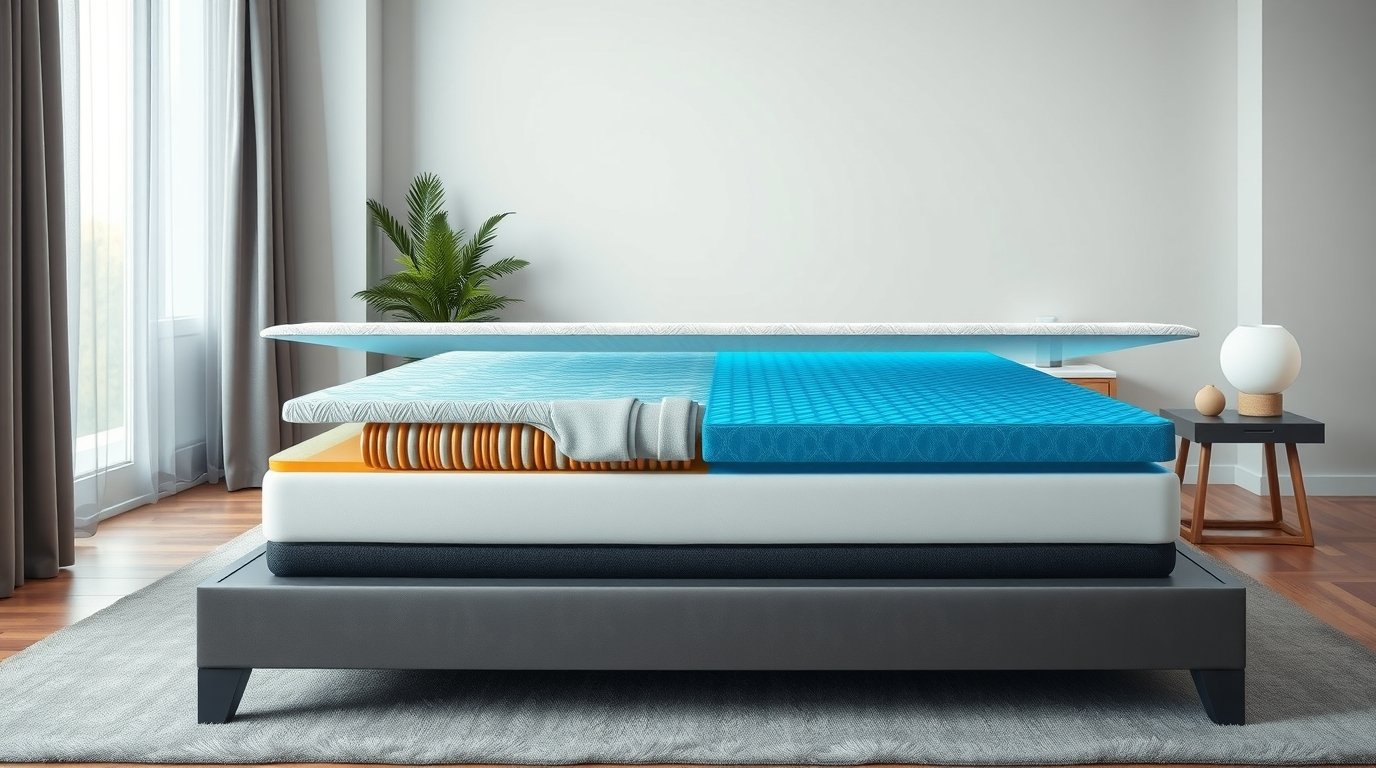
Memory Foam Mattresses – Comfort, Pressure Relief & Motion Isolation Explained
Memory foam mattresses are all-foam beds that use viscoelastic polyurethane foam to contour closely to your body, delivering standout pressure relief and motion isolation, especially for side sleepers and couples. They can be an excellent fit if you want a “hugging” feel around your shoulders and hips, but they also come with trade-offs like more heat retention and a deeper sink than other mattress types.
What Is a Memory Foam Mattress?
A memory foam mattress is built around viscoelastic polyurethane foam that softens in response to body heat and pressure, then slowly returns to its original shape once weight is removed. This slow-response behavior is what creates the familiar “body hug” and contouring cradle around your curves and joints.
Most memory foam beds use a multi-layer design: softer comfort foam near the surface, transition foam to prevent excessive sink, and a denser polyfoam support core underneath. Comfort layers are often 2–4 inches thick, while the high-density base foam may be 5 inches or more to keep the mattress from sagging prematurely.
Foam density plays a key role in both feel and durability; low-density foams feel softer and more airy, while higher-density foams feel more substantial, conform more slowly, and usually last longer. Premium memory foam mattresses typically use higher-density foam in the top layer combined with slightly less dense transition foams for a balance of contouring and ease of movement.
Memory foam mattresses generally suit sleepers who like close body contouring, need extra pressure relief, or share a bed and want to cut down on partner disturbance. They are especially popular among side sleepers, people with joint or back pain, and couples who prefer a quieter, bounce-free feel.
How Memory Foam Works (Viscoelastic Response)
Memory foam is described as viscoelastic because it behaves partly like a thick liquid and partly like a stretchy solid under load. When you lie down, your body heat and weight soften the foam, letting it compress more under heavier areas like hips and shoulders while maintaining support under lighter areas like the waist.
As your body warms the material, its viscosity drops and it conforms more deeply, which is why you often notice the mattress “settling in” around you during the first few minutes in a position. When you move or get out of bed, the foam gradually returns to its initial shape, which is the classic slow “memory” effect.
This behavior helps distribute body weight more evenly over the mattress surface. By reducing peak pressure in areas like the shoulders, lower back, and hips, memory foam can lessen discomfort and help some sleepers wake with fewer aches.
Common Foam Densities & Layer Structures
Manufacturers often describe memory foam using both density and firmness, and these specs combine to shape both comfort and lifespan. Lower-density memory foams are lighter, more breathable, and easier to move on, while higher-density foams feel plusher at first contact but can feel heavier and more “enveloping.”
A typical all-foam memory foam mattress might be structured as:
- Comfort layer: 2–4 inches of memory foam for contouring and pressure relief.
- Transition layer: 1–3 inches of slightly firmer foam to prevent “bottoming out” into the core.
- Support core: 5–7 inches of high-density polyfoam to provide overall stability and keep the spine aligned.
Some designs use multiple comfort layers with different densities or incorporate gel, graphite, copper, or open-cell structures in the foam to modify cooling and feel. The mix of thicknesses and densities across these layers is a major reason two “medium-firm” memory foam mattresses can still feel quite different in practice.
Who Memory Foam Is Best Suited For
Memory foam is generally best for sleepers who prioritize pressure relief and motion isolation over bounce. Side sleepers, people who wake up with sore joints, and couples who don’t want to feel each other moving tend to benefit the most.
It also suits light-to-average weight sleepers particularly well because they can sink enough into the foam to activate its contouring without compressing straight through to the firm core. Sleepers who prefer a slow, enveloping feel, or who like the sensation of being “hugged” by the mattress rather than floating on top, are strong candidates for memory foam.
Key Benefits of Memory Foam Mattresses
Memory foam’s main strengths are pressure relief, motion isolation, and close body contouring that can help maintain spinal alignment when matched with the right firmness. These characteristics explain why memory foam remains one of the most popular mattress materials despite competition from hybrids, latex, and advanced coil systems.
Pressure Relief for Side Sleepers
Side sleepers often put the most weight on narrower areas like shoulders and hips, which can create pressure points on firmer, less conforming beds. Memory foam is specifically designed to redistribute that weight by allowing these heavier areas to sink in while supporting the waist and lower back.
This even weight distribution can ease tension in the shoulders and hips and may help reduce numbness or tingling from compressed nerves. For many side sleepers dealing with joint sensitivity, a well-chosen memory foam mattress can make extended time in one position more comfortable.
Motion Isolation for Couples
Because memory foam absorbs energy rather than bouncing it across the surface, it excels at motion isolation. The foam compresses under each person independently, so movements like turning over, getting in and out of bed, or shifting positions are much less likely to ripple across to a partner.
This makes memory foam appealing for light sleepers who share a bed, particularly if one partner moves frequently or keeps a different schedule. All-foam builds also remain virtually silent, which is another plus for couples who are easily disturbed by squeaks or creaks.
Body Contouring & Support Balance
A good memory foam mattress combines deep contouring with enough underlying support to maintain a neutral spinal position. The top layers handle pressure relief, while the transition and base layers prevent the body from sinking too far, which could over-flex the spine.
When firmness and foam density are well matched to body weight and sleep position, this balance can reduce strain on the lower back and promote more ergonomic posture through the night. This is one reason many people with chronic back or joint discomfort gravitate toward quality memory foam models.
Potential Drawbacks to Consider
Memory foam is not perfect for everyone. Common complaints include sleeping too warm, feeling stuck in the mattress, and noticing a chemical odor when the bed is first unboxed.
Heat Retention Concerns
Traditional memory foam tends to trap body heat because of its dense structure and close body contact. Many hot sleepers report feeling warmer overnight on standard memory foam compared with more breathable coil or latex beds.
To address this, brands now use gel-infused or open-cell foams and pair them with breathable covers or phase-change fabrics to improve airflow. While these features help, memory foam still often sleeps warmer than well-ventilated innerspring or latex designs.
Sink-In Feel & Mobility
The same deep contouring that delivers pressure relief can also make memory foam feel less responsive and more restrictive for some sleepers. People who change positions frequently or prefer to sleep “on” rather than “in” the mattress sometimes describe the sensation as being stuck or slowed down when moving.
Lower-responsiveness can be particularly noticeable in softer, higher-density foams, where the body sinks deeper and the material takes longer to rebound. For those who want more bounce and easier movement, latex or hybrid models with coils often feel more agile while still offering decent pressure relief.
Off-Gassing Expectations
Many memory foam mattresses release an initial chemical odor, often called off-gassing, when removed from their packaging. This smell usually fades as the mattress airs out over several hours to a few days depending on ventilation.
Seeking certifications like CertiPUR-US and allowing the bed to fully expand and ventilate for at least 24–72 hours in a well-aired room can help minimize off-gassing concerns. Those with strong chemical sensitivities may want to unbox in a separate room before sleeping on the mattress.
Memory Foam Mattress Firmness Levels
Memory foam mattresses span a range from soft to firm, but many popular models cluster around medium to medium-firm because this range suits a wide variety of sleepers. Firmness is often rated on a simple scale, where lower numbers are plusher and higher numbers feel harder and more supportive.
- Soft: Pronounced sink and plushness, best for lighter side sleepers who want extra cushioning at joints.
- Medium / medium-soft: Balanced contouring and support for many side and combination sleepers.
- Medium-firm: Flatter, more supportive surface that works well for back sleepers and some stomach sleepers who still want some pressure relief.
Foam density, total comfort layer thickness, and user feedback all influence how a given mattress feels in practice. Reviews that mention “firmer than expected” or “softened over time” are useful to interpret specs before you buy.
Who Should Choose a Memory Foam Mattress?
Memory foam is not one-size-fits-all, but certain sleeper profiles benefit more consistently than others. Matching your body type, sleep position, and comfort preferences to foam characteristics makes it easier to select a model that feels right long-term.
Side Sleepers
Side sleepers typically need extra cushioning around the shoulders and hips to maintain neutral spinal alignment. Memory foam’s contouring reduces sharp pressure in these areas, helping keep the spine straighter across the side body.
A soft to medium memory foam mattress usually works best for light-to-average weight side sleepers, while heavier side sleepers may need a medium to medium-firm option with thicker comfort layers to avoid bottoming out.
Couples
Couples who are easily disturbed by movement often appreciate memory foam’s motion-absorbing qualities. With good motion isolation, one partner can roll over or get in and out of bed with far less chance of waking the other.
All-foam construction also reduces noise compared with coil-heavy beds, which is useful in small apartments or shared spaces. For couples with different firmness needs, a medium feel often provides a workable compromise.
Light-to-Average Weight Sleepers
Lighter sleepers may struggle to activate contouring in very firm coil or latex beds. Memory foam responds more readily to lower pressure, meaning lighter bodies can still experience the deep hug and pressure relief the material is known for.
Average-weight sleepers often find that medium or medium-firm memory foam models provide a sweet spot between cushioning and support. Those significantly above average weight, however, often benefit from hybrid constructions that combine memory foam comfort layers with supportive coils underneath.
Memory Foam vs Other Mattress Types
Understanding how memory foam compares to hybrids and latex helps clarify whether its feel and performance match your expectations. The main differences come down to support system, responsiveness, temperature regulation, and durability.
Memory Foam vs Hybrid
Hybrid mattresses blend foam comfort layers with a coil support core, aiming to merge contouring comfort with robust support and better airflow. Compared with hybrids, memory foam mattresses usually offer deeper contouring and better motion isolation, especially in all-foam builds.
Hybrids often feel more responsive and easier to move on, with stronger edge support for people who sit or sleep near the perimeter. They also typically suit heavier sleepers better, since the coil core resists deep sagging more effectively than foam alone.
Memory Foam vs Latex
Latex mattresses use foam made from natural or synthetic rubber, which feels more buoyant and springy compared to memory foam’s slow, melting contour. Memory foam offers more pronounced body hug and pressure relief at a given firmness level, along with stronger motion isolation.
Latex tends to sleep cooler, feel bouncier, and make it easier to change positions, which appeals to combination sleepers and those who dislike being “stuck” in the bed. Natural latex also attracts eco-conscious buyers, while memory foam often wins on price and wide availability.
How We Evaluate Memory Foam Mattresses
Evaluating memory foam mattresses involves looking beyond marketing terms and focusing on measurable construction details plus long-term user trends. Key factors include foam density and thickness, cooling technologies, edge performance, firmness accuracy, and verified customer feedback.
Foam Density & Layer Thickness
Foam density and layer thickness help predict both comfort and durability. Higher density memory foam often resists body impressions longer and delivers more substantial contouring, but can feel heavier and warmer.
Sufficient comfort-layer thickness is important for pressure relief, especially for side sleepers and heavier users. Thin comfort layers may feel nice initially but can pack down quickly, leaving you closer to the firmer base and increasing pressure over time.
Cooling Features
Because heat is a common complaint, cooling features play a major role in modern memory foam designs. These can include gel-infused or graphite-infused foams, ventilated or open-cell structures, breathable covers, and phase-change materials that help regulate surface temperature.
When assessing cooling claims, it helps to weigh the actual material specs against consistent user reviews about heat build-up or temperature neutrality. A thicker comfort system paired with a breathable cover and good room ventilation often performs better than a thin gel layer alone.
Customer Comfort Trends
Long-term user feedback offers insight into how a memory foam mattress holds up beyond the initial trial period. Patterns in reviews—such as reports of early sagging, perceived softening, persistent heat, or great comfort for specific sleeper types—are valuable signals.
Looking at star ratings in context, the nature of complaints, and whether the brand responds constructively to issues like returns or warranty claims helps build a fuller picture of real-world performance. This is particularly important on marketplaces like Amazon, where many reviews can highlight recurring strengths or weaknesses.
Best Memory Foam Mattresses on Amazon
Specific “best” picks change frequently as new models launch and deals shift, but a few memory foam mattresses consistently stand out on Amazon for value and user satisfaction. Popular options often combine a medium or medium-plush feel with gel-infused foams and strong overall reviews from a large customer base.
When browsing Amazon, give extra weight to models that have been independently tested by reputable sleep review sites and not just highly rated by customers. Verified reviews that mention body type, sleep position, and specific pros or cons (like heat, edge support, or firmness accuracy) are especially helpful.