
Adjustable and Smart Mattresses Guide
Adjustable and smart mattresses appeal to shoppers who want more customization than a standard fixed mattress can offer. Depending on the model, that may include adjustable firmness, split comfort for couples, motion or sleep tracking, app controls, position changes, or integrated base compatibility.
What Makes This Category Different
Unlike standard mattress categories, adjustable and smart mattresses are defined as much by features as by materials. Some use air chambers, some use responsive comfort layers, and some are built to pair with adjustable bases or sleep-tech ecosystems.
Who This Category Often Suits
- Couples with different firmness preferences
- Readers who value customization more than simplicity
- Sleepers comparing technology and adjustability alongside comfort
Main Tradeoffs
The biggest tradeoffs are usually cost, complexity, and long-term value. The more technology a mattress includes, the more carefully shoppers should compare warranty, service, and whether the features solve a real sleep problem.
Questions to Ask Before Buying
Readers considering this category should ask whether they truly need adjustable firmness or sleep-tech features, whether the mattress will be shared by partners with different preferences, and whether a standard mattress plus separate adjustable base would solve the same problem more simply. Dream Mattress treats adjustable and smart mattresses as a niche category that can be valuable for the right buyer but unnecessary for many shoppers.
How Feature Sets Change the Value Proposition
Not every adjustable or smart mattress is trying to solve the same problem. Some focus on split comfort for couples, some focus on adjustable firmness, and others emphasize app-based sleep tracking or base compatibility. That matters because the feature that sounds most impressive in a product description may not be the feature that delivers the most real value for the shopper. Dream Mattress encourages readers to compare functions against sleep goals rather than against novelty alone.
For example, a couple with different firmness preferences may find real value in a system that allows both sides of the bed to feel different. A solo sleeper, by contrast, may gain more from comparing strong standard hybrid or latex options if their main need is support or easier movement instead of customization. Smart features only increase mattress value when they meaningfully improve fit or usability.
Who Should Compare This Category Carefully
Adjustable and smart mattresses deserve careful comparison from shoppers who are budget-conscious, unsure whether they will actually use the technology, or primarily trying to solve a classic mattress problem such as cooling or pressure relief. In many cases, the best result may come from a more traditional mattress type plus a stronger understanding of firmness and support rather than from a more complex tech-driven product. That is why Dream Mattress positions this page as part of a larger comparison path instead of as an automatic upgrade tier.
How to Use This Guide
Readers considering this category should also review Best Mattress for Couples, How to Choose a Mattress, and Reviews. If the primary goal is support rather than features, comparing standard hybrids or latex mattresses may still be worthwhile.
Related Guides
FAQ
Are adjustable and smart mattresses mainly for couples?
They are especially relevant for couples with different preferences, but solo sleepers who want customization may also find them useful.
Do smart features matter more than mattress feel?
No. Feel, support, and usability still matter more than technology alone. A mattress should first work well as a mattress.
How This Category Shows Up in Real Shopping
In real shopping, adjustable and smart mattresses usually appear late in the research process rather than early. Shoppers first figure out whether they need more support, more cooling, better motion isolation, or a different mattress size. Only after those basics become clearer does it make sense to ask whether technology or adjustability adds enough practical value to justify the higher cost and complexity. That is why Dream Mattress treats this category as a specialized branch of mattress research, not as the default starting point for most readers.
For the right shopper, though, this category can solve a very specific problem that standard mattresses do not solve as elegantly. Split preferences, feature-driven personalization, and integration with an adjustable sleep setup can be meaningful benefits. The key is making sure those benefits are central to the purchase rather than incidental.
Common Questions About Adjustable and Smart Mattresses
Should I compare this category only after reading other mattress guides?
Usually yes. Readers often make better decisions when they first understand mattress type, firmness, and sleeper-fit basics before adding technology features to the comparison.
Is an adjustable mattress automatically better for back issues?
Not automatically. Some readers may benefit from position flexibility or customized feel, but the underlying support and comfort design still matter more than the feature list alone.
Can a standard mattress still be the better buy?
Absolutely. Many shoppers discover that a strong hybrid, latex, or foam mattress solves their real comfort problem without needing a more complex smart-sleep system.
How Readers Usually Use This Page in Adjustable And Smart Mattress Research
This page is most useful when it helps readers move from a broad problem or category interest into a more exact comparison path. Dream Mattress uses pages like this to narrow the field through real decision factors instead of asking readers to rely on generic “best mattress” language alone. That means the next step after this page is usually another focused comparison, not a restart of the whole research process.
The reason this matters is that feature tradeoffs, sleep needs, and whether customization truly adds enough value. Once those tradeoffs are clearer, the internal links around the site become much more useful. They let readers compare the remaining options with more context and less guesswork, which is one of the strongest ways a mattress site can feel genuinely helpful instead of repetitive.
Best Next-Step Questions
- What is the single strongest uncertainty this page helped reduce for me?
- Which linked Dream Mattress page would sharpen the remaining comparison most effectively?
- Do I now need more category context, more buyer guidance, or more review-level comparison?
- What tradeoff matters enough that I should compare it directly before moving to product-level decisions?
All 7 adjustable & smart mattresses reviews
Newest first. Consumables, accessories and parts that were once filed here are excluded.
-

Portable Folding Bed with Latex Mattress – Ideal for Small Spaces and Temporary Use
A portable folding bed with a latex mattress offers comfort and convenience for small apartments, guest rooms, and temporary use. Explore its…
-

NapQueen 8 Inch Full Mattress Review: Medium Firm Bamboo Charcoal Memory Foam
Evaluate the NapQueen 8 Inch Full Mattress for medium firm support, pressure relief, and temperature regulation. Learn about its construction, materials, and…
-
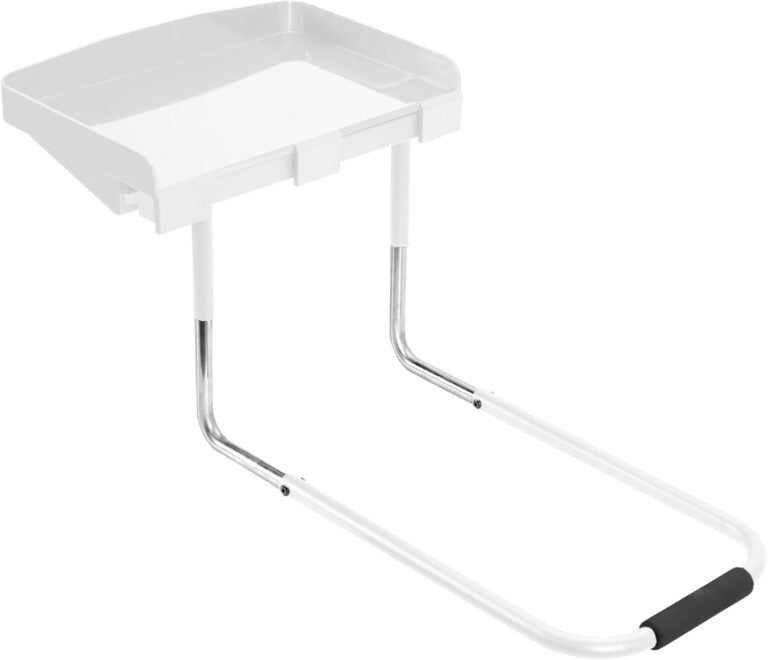
Height Adjustable Under Mattress Shelf: Ideal Nightstand Alternative for 2026
The Height Adjustable Under Mattress Shelf offers space-efficient storage for nighttime essentials. Its adjustable height and durable construction make it a practical…
-
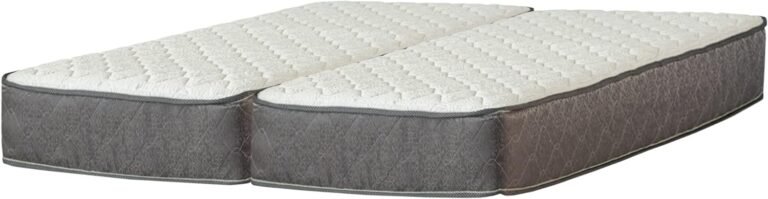
Greaton 9-Inch Medium Plush Mattress Review: Comfort & Support for Adjustable Beds
Evaluate the Greaton 9-inch medium plush mattress for adjustable beds. Learn about its comfort, support, and setup convenience for optimal sleep.
-
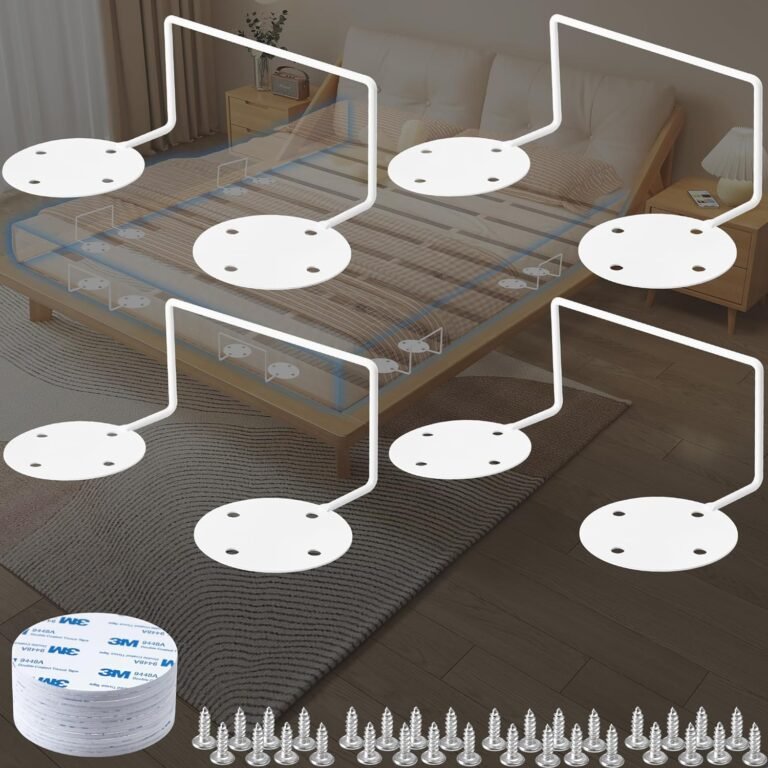
Mattress Retainer Bar for Adjustable Bed: Enhance Sleep Stability and Safety
Discover how a mattress retainer bar for adjustable beds prevents sliding and enhances sleep stability. Learn about non-slip design, secure attachment options,…
-
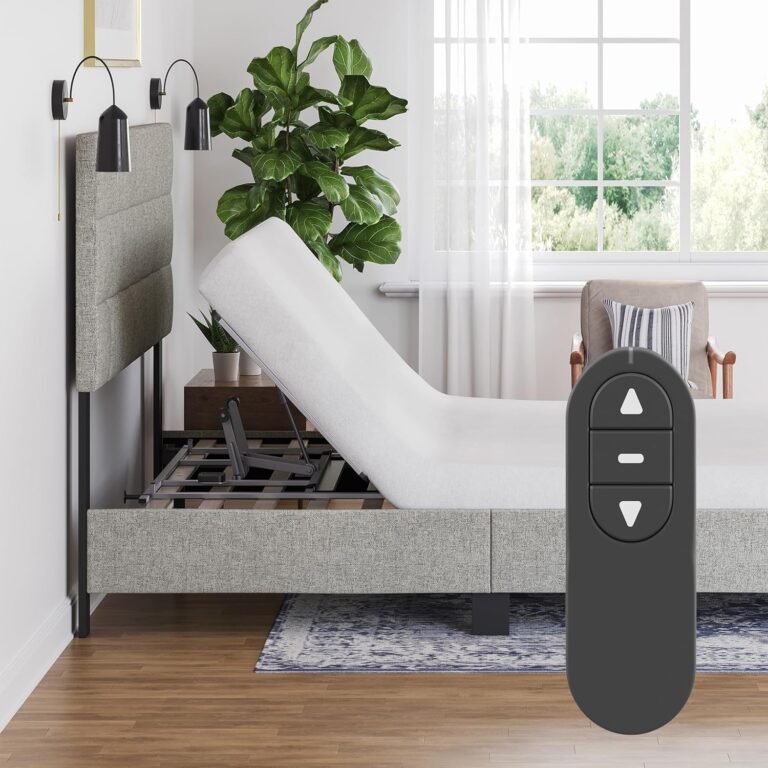
Boyd Sleep Adjusta Flex Full Adjustable Base Frame Review: Comfort, Compatibility, and Convenience
Discover the Boyd Sleep Adjusta Flex Full Adjustable Base Frame’s compatibility, adjustability, and durability. Ideal for customizable sleep support and ease of…
-

Renanim Adjustable Bed with Gel Mattress: Cooling, Massage, and Ergonomic Support for 2026
Explore the Renanim adjustable bed with cooling gel memory foam mattress, offering massage, zero gravity positioning, and ergonomic support for optimal sleep…