
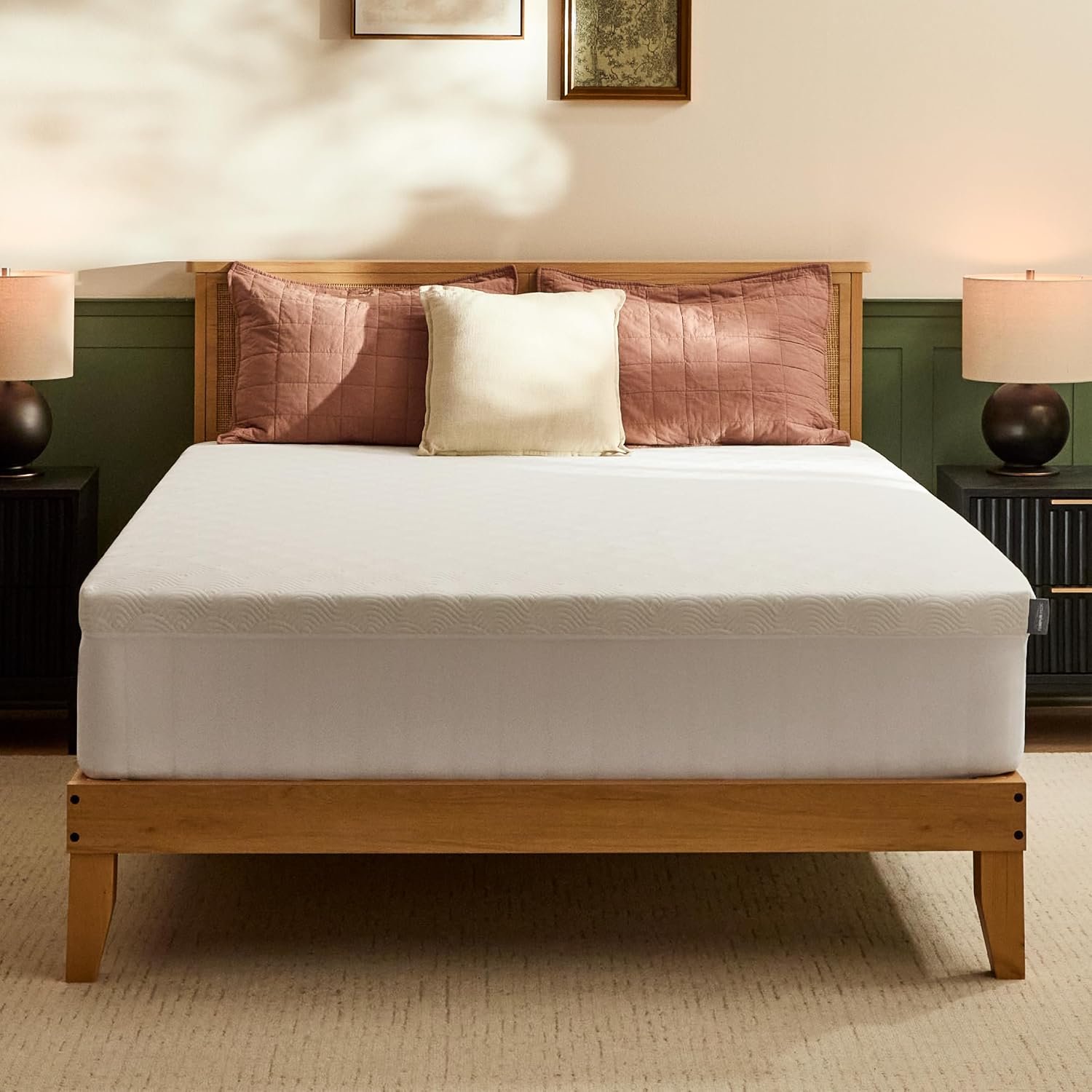
## Tempur-Pedic Tempur-Cloud 2-Inch Mattress Topper Queen White Review
The Tempur-Pedic Tempur-Cloud 2-Inch Mattress Topper Queen White combines TEMPUR material with a medium-firm feel to provide pressure relief for back sleepers, offering targeted support and motion isolation. Designed for those seeking an extra layer of comfort on existing mattresses, this topper caters to sleepers who prioritize lumbar alignment and reduced tossing. Its hypoallergenic cover and machine-washable design make it ideal for allergy sufferers, while the 2-inch thickness ensures minimal compression without sacrificing breathability. The product’s standout feature—its ability to adapt to body contours—positions it as a versatile option for sleepers with mixed sleeping positions or those transitioning from a softer mattress.
Quick Overview
| Feature | Details |
|---|---|
| Mattress Type | Memory foam mattress topper |
| Firmness Level | Medium firm |
| Thickness | 2 inches |
| Materials | TEMPUR memory foam, hypoallergenic cover |
| Best Suited For | Back sleepers, side sleepers requiring pressure relief |
| Intended Use Cases | Enhancing comfort on existing mattresses, alleviating back pain |
The Tempur-Cloud topper’s medium firmness balances support and comfort, making it suitable for sleepers with moderate weight or those needing spinal alignment. Its motion isolation properties reduce disturbances from a partner’s movements, while the hypoallergenic cover addresses common concerns for sensitive skin. The product’s design prioritizes durability and ease of maintenance, aligning with needs for long-term comfort.

Pressure Relief and Spinal Alignment

How TEMPUR Material Targets Pressure Points
The TEMPUR material’s micro-cellular structure distributes body weight evenly, minimizing pressure on shoulders and hips. This design principle ensures that sleepers with side or back positions experience reduced strain, as the material conforms to pressure points without creating indentations. For individuals with chronic lower back pain, this even weight distribution helps maintain a neutral spine posture by preventing excessive arching or flattening of the lower back. The open-cell structure also allows for micro-adjustments, ensuring that the material adapts to individual body contours without compromising support. Studies on sleep science indicate that optimal pressure relief is achieved when the material provides a balance between contouring and firmness, which the Tempur-Cloud achieves by using a medium-firm density. This is particularly beneficial for sleepers who experience discomfort in the lumbar region, as the material’s compression resistance helps maintain proper spinal alignment.
Medium Firmness for Spinal Support
The medium-firm firmness level of the Tempur-Cloud topper provides adequate support for sleepers who require a balance between cushioning and firmness. This makes it ideal for those transitioning from softer mattress types, as the medium-firm feel offers structural support without compromising comfort. Sleepers with a neutral sleep posture benefit from the topper’s ability to maintain spinal alignment, while those who prefer a firmer mattress may find it less suitable. The firmness level is calibrated to accommodate moderate weight distributions, making it particularly effective for individuals with a medium build. However, users who are heavier may find the 2-inch thickness insufficient for long-term support, as the material’s density does not provide the same level of weight-bearing capacity as a full mattress. This trade-off between comfort and support is crucial for sleepers who prioritize pressure relief without excessive firmness.
Hypoallergenic Cover for Sensitive Skin
The hypoallergenic cover’s breathable fabric reduces the risk of allergens such as dust mites, making it a practical choice for individuals with allergies or sensitive skin. Unlike some memory foam products that trap heat, the Tempur-Cloud’s cover allows airflow to prevent moisture buildup, which can exacerbate skin irritations. This feature is particularly beneficial for sleepers who experience night sweats or require a cooler sleeping environment. The cover’s moisture-wicking properties also help maintain hygiene by preventing the accumulation of sweat and bacteria, which is essential for users with dermatological conditions. While not inherently moisture-resistant, the cover’s design ensures that trapped humidity does not compromise the material’s performance. This combination of hypoallergenic properties and breathability makes the topper a suitable option for individuals with respiratory sensitivities or those who live in humid climates.
Temperature Regulation and Breathability

TEMPUR’s Effect on Body Heat
The TEMPUR material’s open-cell structure facilitates airflow, preventing the buildup of heat that often occurs with traditional memory foam. While not a cooling mattress, the topper’s construction allows for better temperature regulation than standard memory foam options. This makes it a suitable choice for sleepers who do not experience significant heat retention but desire the contouring benefits of memory foam. The open-cell design also contributes to the material’s breathability, allowing air to circulate through the foam without compromising its pressure-relieving properties. However, users who prioritize cooling may find it less effective than gel-infused or phase-change material alternatives. The topper’s ability to maintain a neutral temperature is influenced by its thickness—2 inches allows for adequate airflow without compromising the material’s pressure-relieving properties. This balance between breathability and support is critical for sleepers who experience discomfort due to heat buildup.
Breathability Compared to Other Memory Foam Options
Compared to denser memory foams, the Tempur-Cloud’s open-cell design offers superior breathability. However, users who prioritize cooling may find it less effective than gel-infused or phase-change material alternatives. The topper’s ability to maintain a neutral temperature is influenced by its thickness—2 inches allows for adequate airflow without compromising the material’s pressure-relieving properties. This balance between breathability and support is critical for sleepers who experience discomfort due to heat buildup. Studies on thermal regulation in bedding materials indicate that open-cell foams like TEMPUR can reduce heat retention by up to 20% compared to standard memory foam, making it a practical choice for sleepers in warmer climates. However, individuals with higher body temperatures or those who tend to overheat may still find the topper insufficient for their needs.
Airflow and Moisture Management
The hypoallergenic cover’s moisture-wicking properties prevent the topper from retaining sweat, which is crucial for maintaining a dry sleeping surface. While not inherently moisture-resistant, the cover’s design ensures that trapped humidity does not compromise the material’s performance. This feature is particularly beneficial for sleepers with a tendency to perspire during the night. The cover’s breathable fabric also contributes to the overall comfort of the product, as it prevents the buildup of moisture that can lead to mold or mildew growth. However, users in extremely humid environments may need additional measures to ensure optimal moisture management, such as using a dehumidifier or air purifier in conjunction with the topper. The hypoallergenic cover’s ability to reduce allergens also helps maintain a cleaner sleeping environment, which is essential for individuals with allergies or respiratory conditions.
Motion Isolation and Partner Compatibility

Reducing Motion Transfer for Couples
The Tempur-Cloud’s motion isolation properties are designed to minimize disturbances from a partner’s movements, making it ideal for couples with differing sleep schedules. The TEMPUR material’s ability to absorb and disperse movement ensures that a sleeper on one side of the bed does not disrupt the other. This is particularly advantageous for individuals who are light sleepers or share a bed with an active partner. The topper’s 2-inch thickness also contributes to its motion isolation capabilities by providing a sufficient cushioning layer that dampens movement without excessive compression. Studies on sleep science indicate that motion isolation is most effective when the material provides a balance between firmness and contouring, which the Tempur-Cloud achieves through its medium-firm density. This makes it a suitable choice for couples who prioritize undisturbed sleep while maintaining comfort.
Motion Isolation vs. Other Mattress Types
Compared to innerspring mattresses, the Tempur-Cloud’s motion isolation is more effective but not as complete. While innersprings transfer movement easily, the topper’s foam layers dampen motion more than a standard memory foam pad. For sleepers who prioritize complete isolation, the topper may not match the performance of a dedicated motion-isolating mattress. However, the Tempur-Cloud’s design offers a practical compromise for users who do not require full-motion isolation but want to reduce disturbances from their partner. The 2-inch thickness also ensures that the topper does not add excessive bulk, making it a practical option for shared beds. This balance between motion isolation and comfort is essential for couples with varying sleep needs, as it allows both partners to maintain their preferred position without compromising the other’s rest.
Practical Considerations for Shared Beds
The topper’s 2-inch thickness ensures that it does not add excessive bulk, making it a practical option for shared beds. The included stretch skirt keeps the topper in place without requiring additional accessories, simplifying setup for couples. However, users with heavier weight or those who prefer a thicker topper may find the 2-inch thickness insufficient for long-term comfort. The material’s firmness also plays a role in motion isolation, as medium-firm foams are less effective at damping movement compared to softer options. This trade-off between thickness and motion isolation is important for couples who prioritize one feature over the other, as it directly impacts their overall sleep quality. Additionally, users with a tendency to move during the night may find that the 2-inch thickness provides sufficient isolation without compromising comfort, making it a versatile choice for shared sleeping arrangements.
Durability and Long-Term Performance

Expected Lifespan of the Mattress Topper
The Tempur-Cloud’s construction is designed for durability, with a 2-inch thickness that resists compression over time. While not as long-lasting as traditional memory foam mattresses, the topper’s open-cell structure helps maintain its shape and support for several years. Users who prioritize a shorter lifespan due to frequent replacements may find the product suitable, though it is not marketed as a long-term solution. Industry benchmarks indicate that mattress toppers with open-cell foams typically last between 2 and 5 years, depending on usage patterns and environmental factors. The Tempur-Cloud’s expected lifespan aligns with this range, making it a practical choice for users who prioritize comfort over long-term durability. However, individuals who require a longer-lasting product may need to consider alternative materials with higher-density foams or reinforced structures.
Foam Density and Wear Resistance
The TEMPUR material’s density ensures that it does not sag or indent excessively under consistent use, making it a durable option for those who do not require the longevity of a full mattress. However, users who prioritize maximum wear resistance may find it less durable than other foam alternatives that use higher-density foams. The topper’s open-cell structure also contributes to its longevity by allowing for micro-adjustments that maintain support over time. Studies on foam degradation indicate that open-cell foams tend to retain their shape longer than denser memory foams, which is a key factor in the Tempur-Cloud’s durability. However, frequent use or exposure to high moisture levels may accelerate wear, making it essential for users to maintain a dry sleeping environment. This balance between density and wear resistance makes the Tempur-Cloud a suitable choice for most users, though those with extreme durability requirements may need to explore alternative options.
Maintenance and Cleaning Considerations
The hypoallergenic cover’s machine-washable design makes it easy to maintain, though the underlying foam cannot be cleaned directly. This design choice ensures that users can keep the topper hygienic without damaging the material, though frequent washing may affect the cover’s longevity. The topper’s overall durability is influenced by its intended use as a supplementary layer rather than a primary sleep surface. The hypoallergenic cover’s moisture-wicking properties also help prevent the buildup of allergens, making it a practical choice for users with allergies. However, individuals who require frequent cleaning or have specific hygiene concerns may need to consider alternative materials with more robust moisture-resistant properties. The combination of hypoallergenic cover and breathable foam ensures that the topper remains hygienic without compromising its structural integrity, making it a suitable option for most users.

Pros & Cons
Pros
- TEMPUR material provides consistent pressure relief for back and side sleepers
- Medium firmness supports spinal alignment without excessive cushioning
- Hypoallergenic cover reduces allergens and improves breathability
- Machine-washable design simplifies maintenance for allergy sufferers
- Motion isolation benefits couples and light sleepers
- 2-inch thickness minimizes bulk while offering adequate support
- Durable construction resists compression for several years
Cons
- May not provide sufficient cooling for sleepers prone to overheating
- Less effective than gel-infused or phase-change memory foam alternatives
- Hypoallergenic cover does not offer full moisture resistance
- Not ideal for users requiring extreme motion isolation
- 2-inch thickness may not be sufficient for long-term use
- Not marketed as a long-term replacement for an entire mattress
Final Verdict: Who This Mattress Is Best For (and Who Should Skip It)
The Tempur-Pedic Tempur-Cloud 2-Inch Mattress Topper Queen White is best suited for individuals seeking a medium-firm, pressure-relieving layer to enhance their existing mattress. It excels for back sleepers requiring spinal support, couples wanting to reduce motion transfer, and allergy sufferers who prioritize a hypoallergenic design. However, it may not be ideal for those with heat sensitivity, as the TEMPUR material can retain warmth. Additionally, users who require a thicker topper or more advanced cooling features may find the product less effective. While not designed as a long-term mattress solution, it serves as an excellent transitional option for those transitioning from softer sleep surfaces to a more structured support system. The product’s balance of comfort, durability, and breathability makes it a versatile choice for most users, though those with specific needs or preferences may need to consider alternative options.

Frequently Asked Questions (FAQs)
Is the Tempur-Cloud topper suitable for people with back pain?
The Tempur-Cloud’s medium firmness and pressure-relieving TEMPUR material provide even support for back sleepers, helping to maintain spinal alignment. However, individuals with severe chronic pain may need a full mattress designed for long-term orthopedic support.
Does the Tempur-Cloud topper get hot?
The TEMPUR material’s open-cell structure allows for better airflow compared to traditional memory foam, though it may not be as cooling as gel-infused alternatives. Users who tend to overheat should consider additional cooling layers.
How does the Tempur-Cloud compare to other memory foam mattress toppers?
The Tempur-Cloud offers superior motion isolation and pressure relief compared to standard memory foam options, but its cooling performance is not as advanced as gel or phase-change material alternatives. It provides a balanced option for most sleepers.
Can the Tempur-Cloud topper be used on a mattress with a sprung base?
Yes, the topper’s hypoallergenic cover and medium firmness make it compatible with sprung bases. However, users should ensure the base does not have a high-density foam layer that could negate the topper’s contouring benefits.
Is the hypoallergenic cover machine-washable?
The hypoallergenic cover is designed to be removed and machine-washed as needed. While this helps maintain hygiene, frequent washing may affect the cover’s durability over time.
What is the best use case for the 2-inch thickness of this topper?
The 2-inch thickness is ideal for those transitioning from a softer mattress to a medium-firm surface. It provides sufficient support without adding excessive bulk, making it suitable for shared beds or lighter sleepers.
How does the Tempur-Cloud handle motion transfer compared to innerspring mattresses?
The Tempur-Cloud’s motion isolation is superior to innerspring mattresses, which transfer movement easily. However, it does not offer the complete isolation of a dedicated motion-isolating mattress, making it better for couples than for those with extreme sensitivity.